Joëlle

251 stones hidden within the piece.

Micro-sculpture - Jewellery — 2026

Joëlle
Joëlle — 1

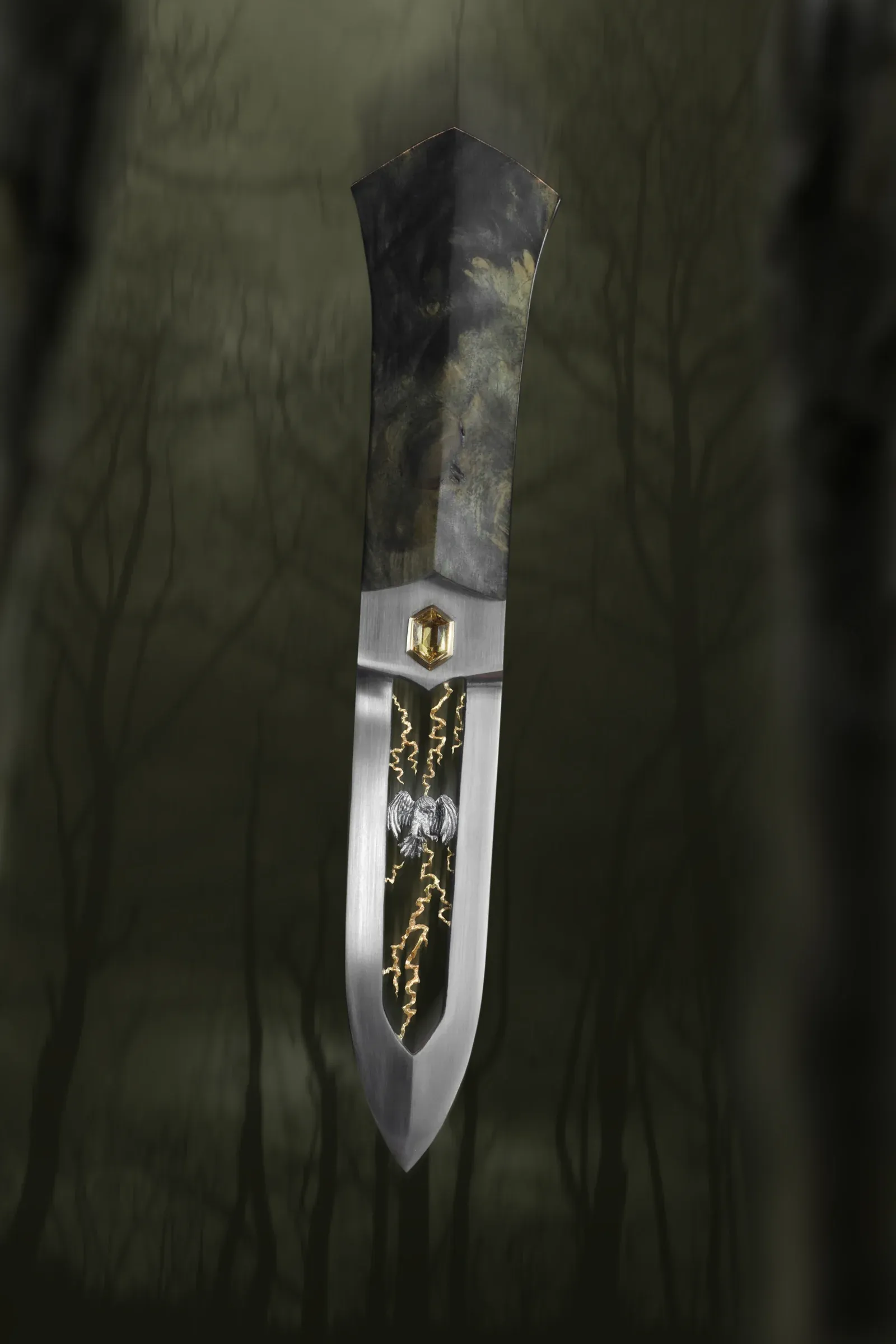
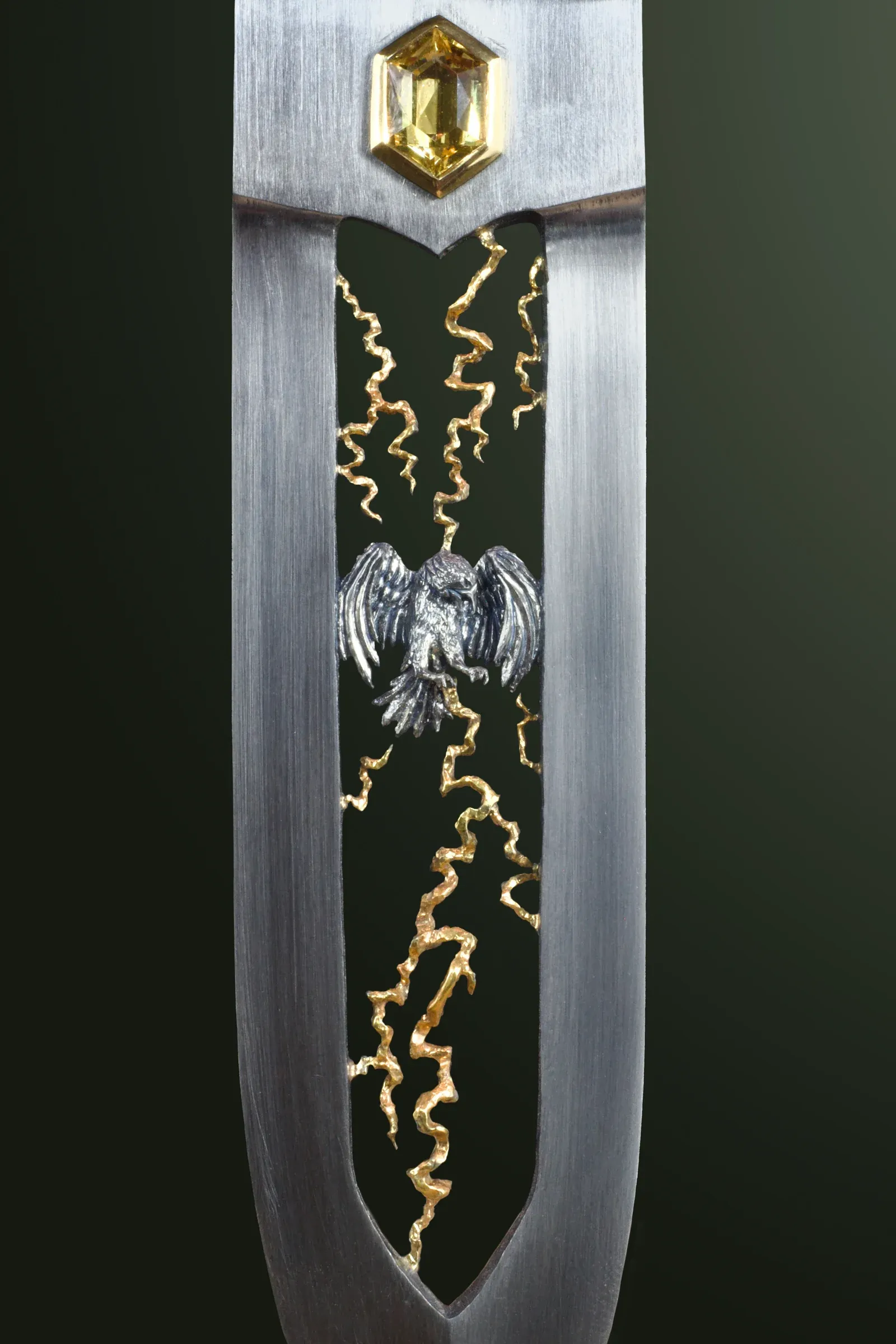
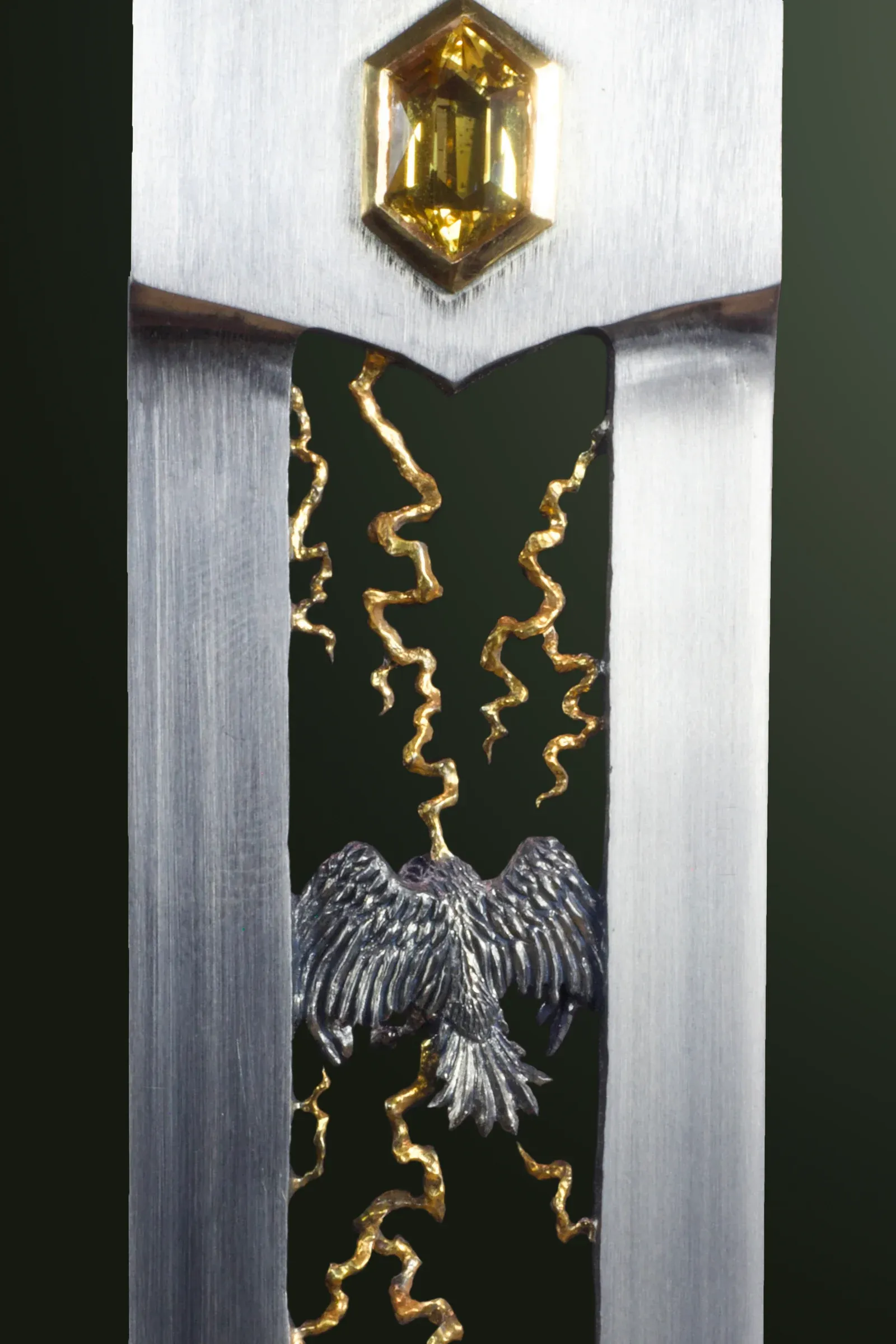
In the tradition, it is Heracles who frees Prometheus by piercing the eagle with an arrow. Here, I chose to make the story my own by weaving in my personal world, replacing the arrow with my signature symbol: the lightning bolt. The sculpture thus becomes a reinterpretation of the myth, in which liberation springs from a force of my own. It becomes possible to turn the tide, to defy fate and become master of one’s destiny.
Joëlle — 3
Joëlle — 4

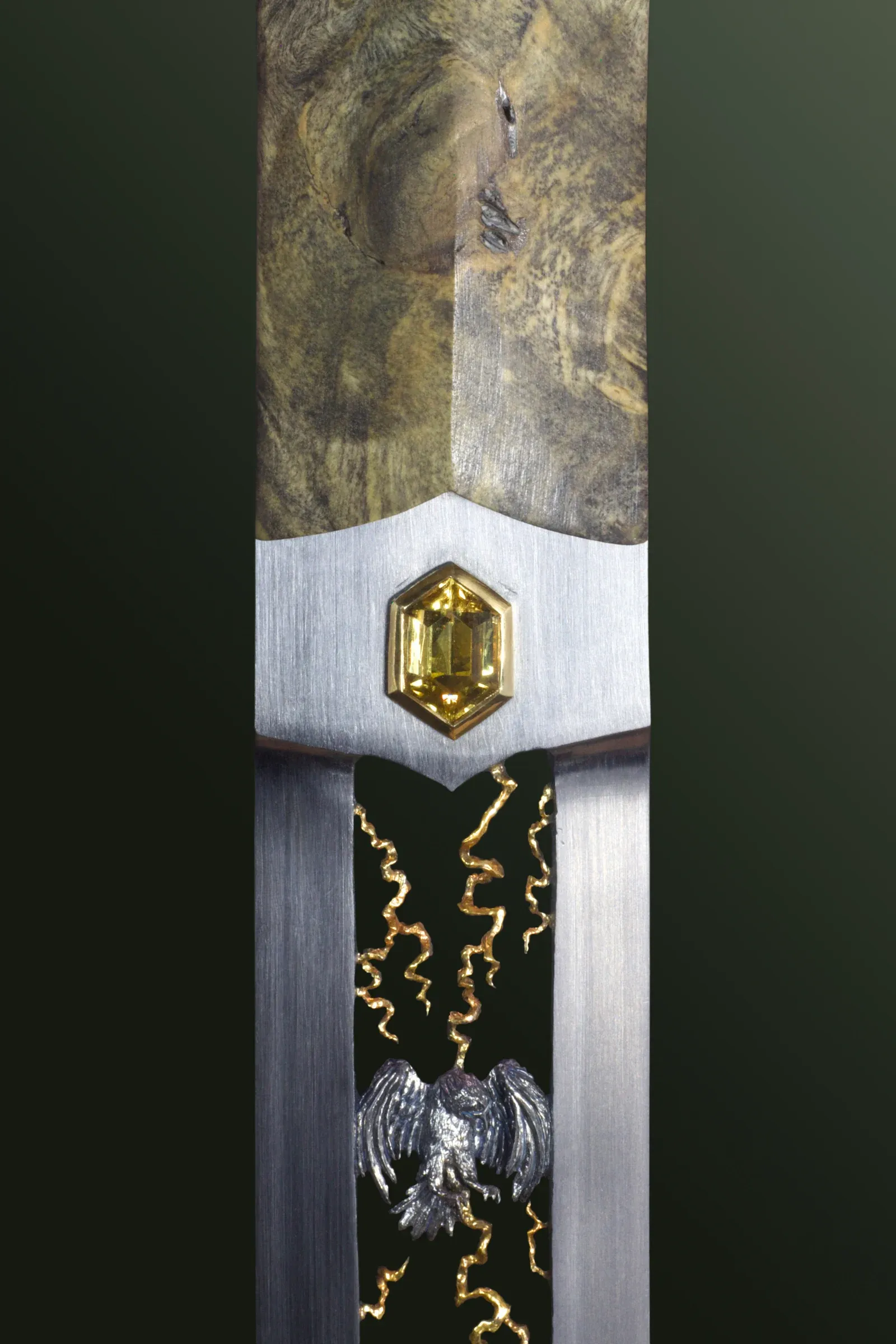
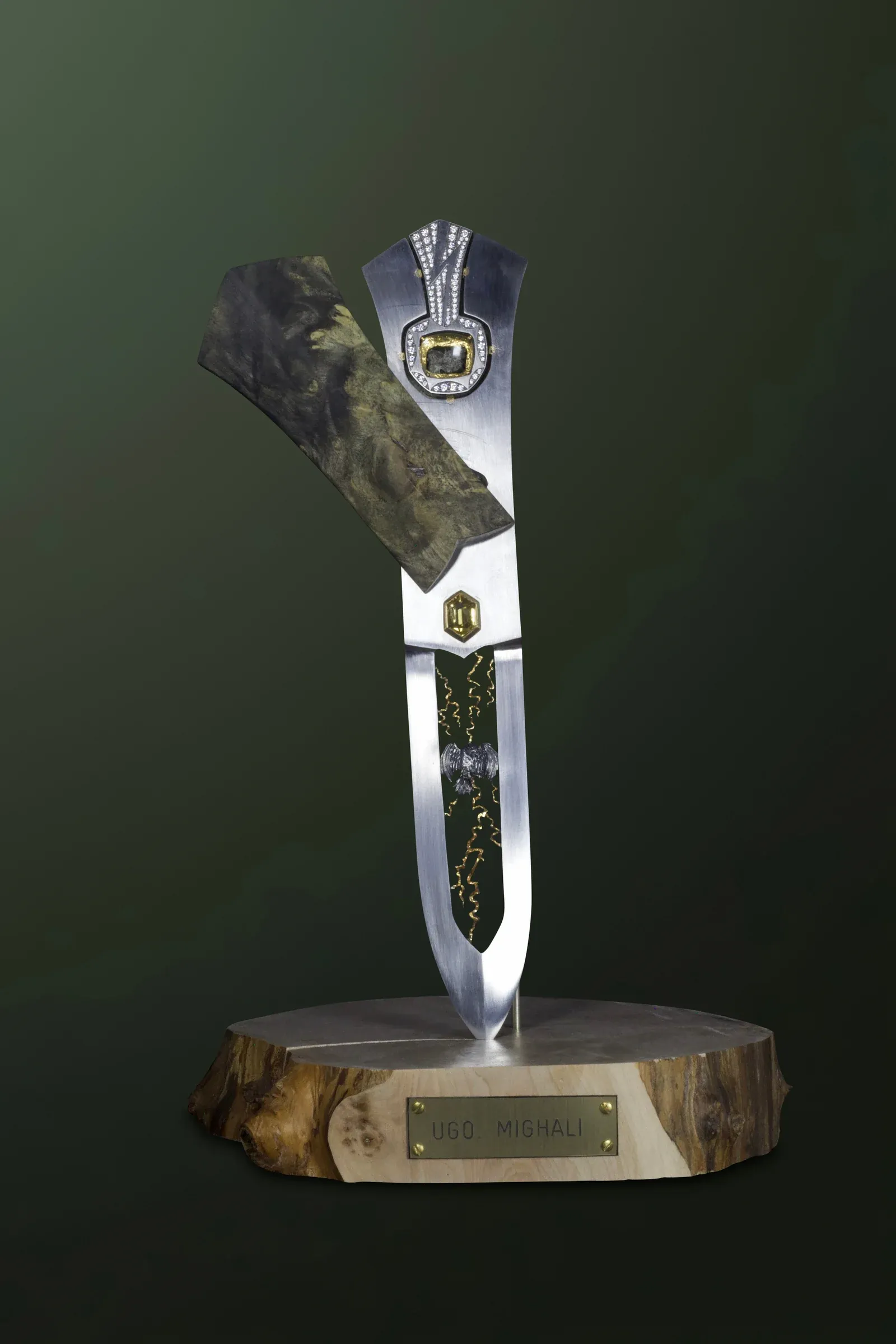
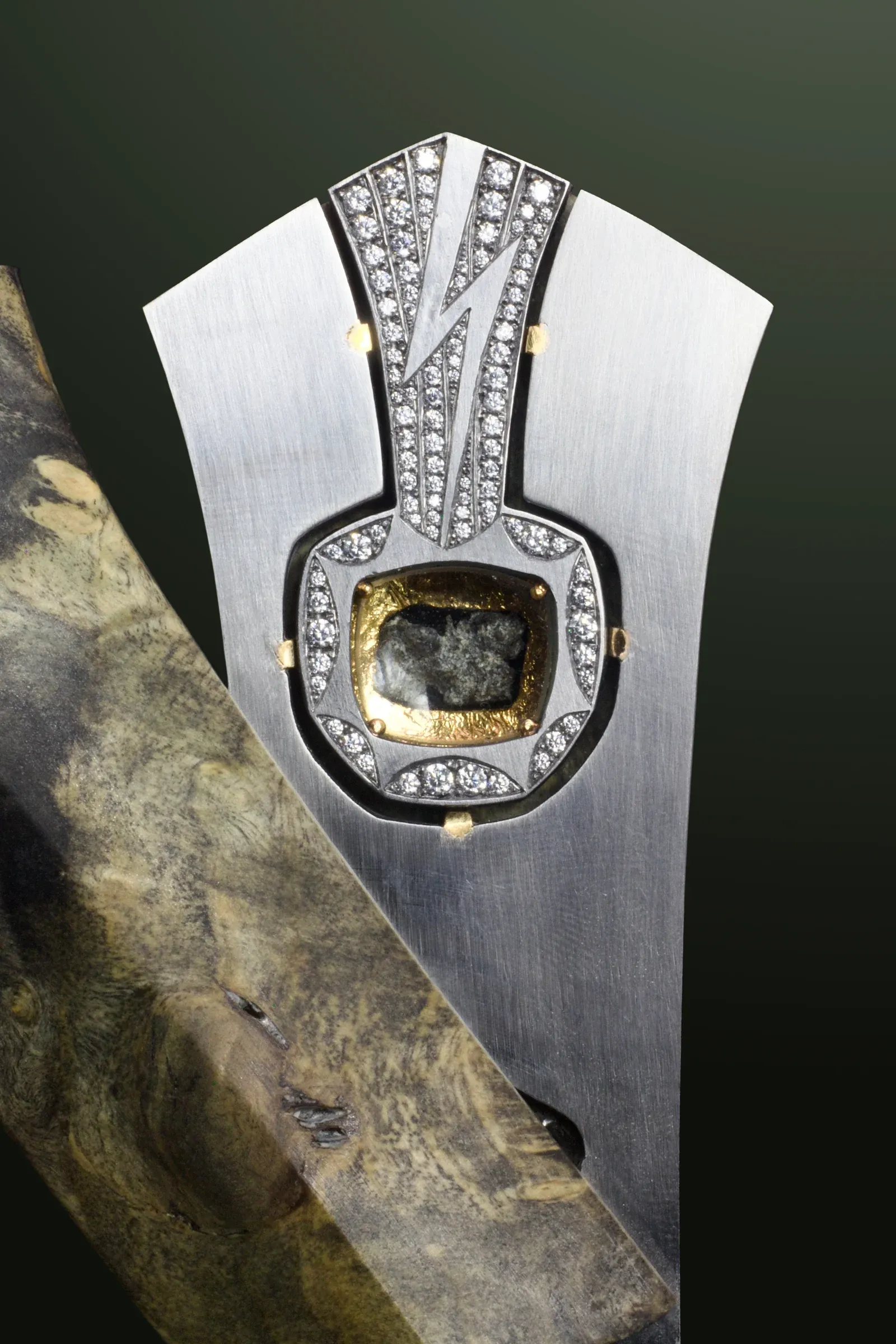
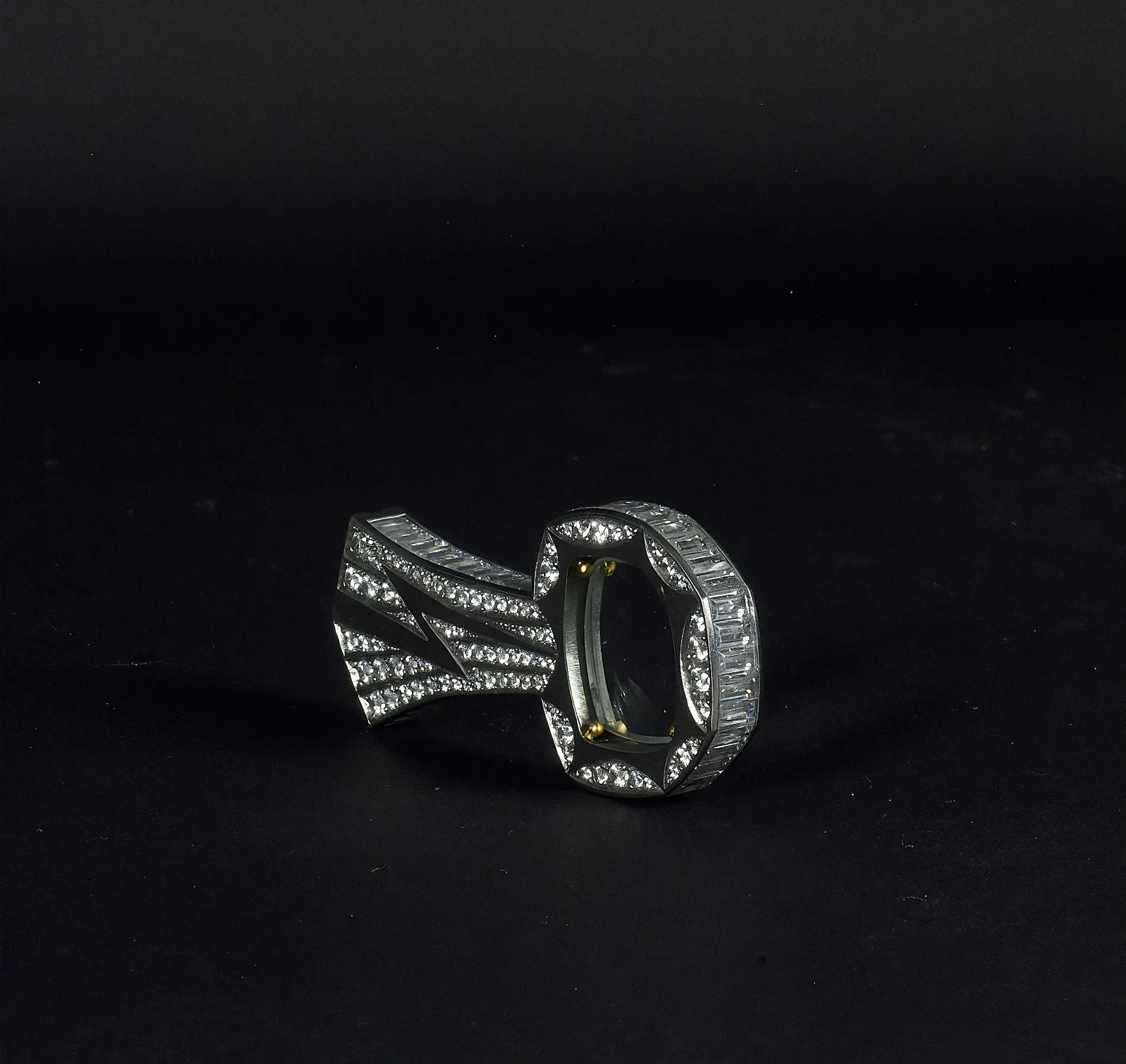
As when it strikes the earth, lightning resonates throughout the piece: in the sculpture itself, on the magnifying lens — hidden beneath a handle of stabilised boxwood burl — and in the mineral it showcases: a fulgurite, a stone born when lightning strikes sand.
Joëlle — 6
Joëlle — 7

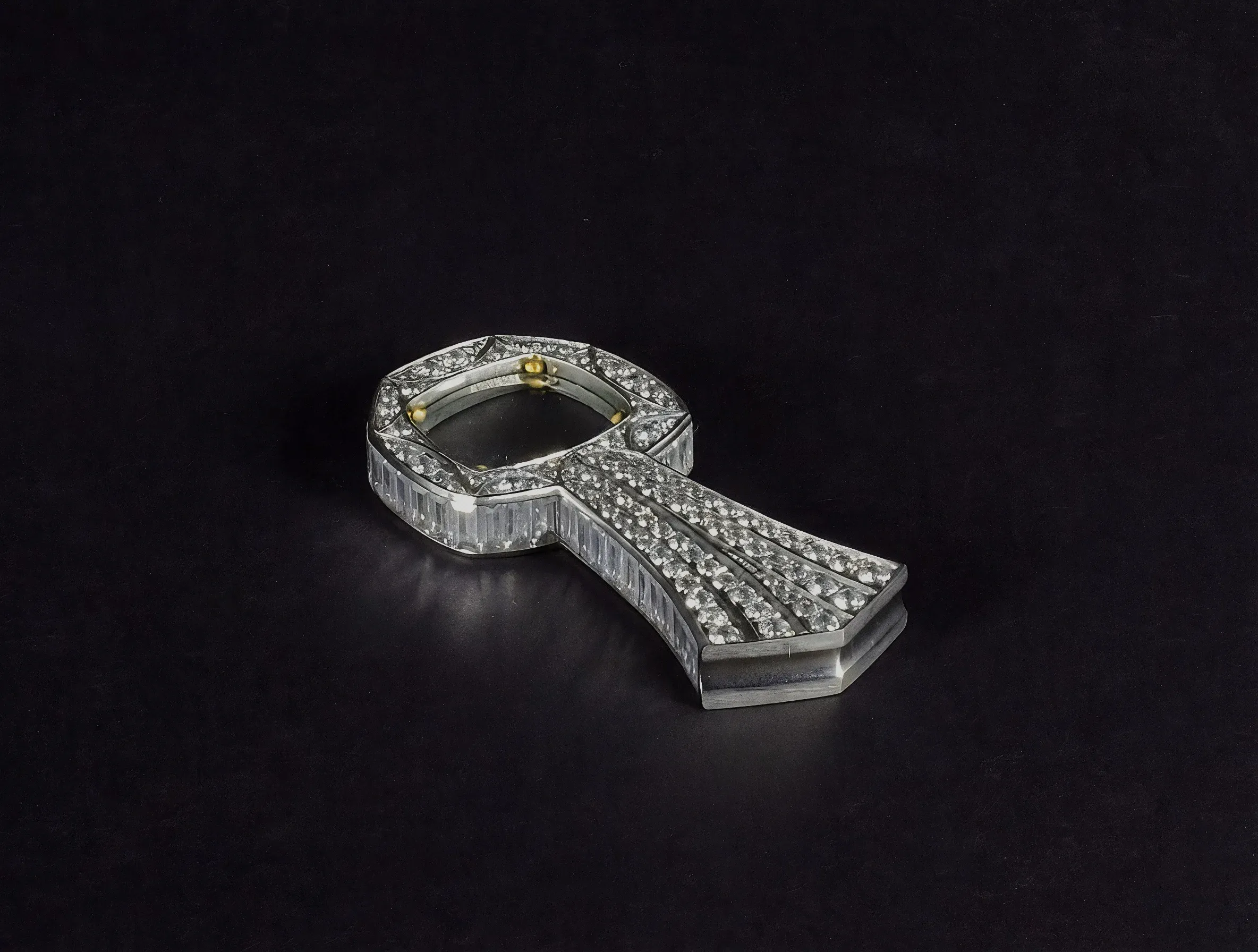
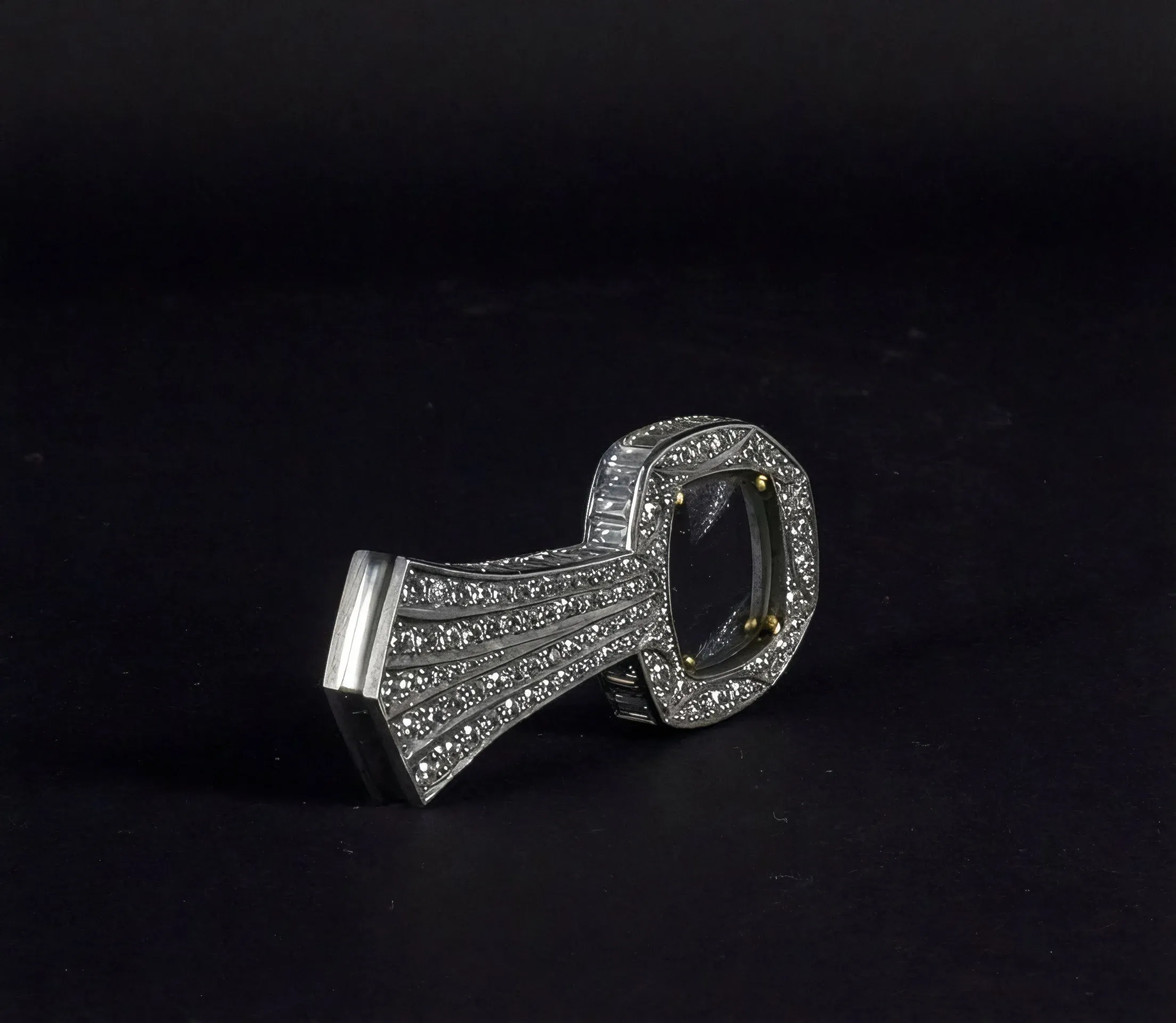
With this creation, I sought to spark surprise through a secret mechanism. I also wanted to create a dialogue between the lens — cut from the blade’s own stainless steel and fully set with stones — and the main sculpture, whose details are revealed with precision beneath its light.
Joëlle — 9

This piece also marks a technical turning point in my work, opening an almost infinite field of possibilities. It embodies an evolution in my use of materials, notably with the introduction of gold in several forms: plating on the lightning bolts, gold leaf on the wooden handle, and solid gold for the settings holding the citrines. The challenge lay in arranging these materials into a harmonious, vibrant whole.
Joëlle — 11
Joëlle — 12

The fruit of ten years of passion and three years of work, this piece was conceived with a precise intention: to stir emotion and surprise in those who discover its secrets.

Joëlle — 14

Genesis of the work

The making of the piece, from the first sketch to the finished knife.

  1. 01

    Prometheus Bound (left, his brother Atlas), black-figure ceramic, 560–550 BC. Vatican Museums.

  2. 02

    Prometheus Bound, painting by Peter Paul Rubens, between 1611 and 1618. Philadelphia Museum of Art.

  3. 03

    Summer 2023. The research phase puts ideas on paper and tests different compositions.

  4. 04

    Once the shape is settled, the outline is sawn from a 5 mm thick plate of stainless steel.

  5. 05

    After the roughing-out, the main elements begin to emerge.

  6. 06

    The back of the piece. The space for the citrines has been sawn into the steel.

  7. 07

    The eagle seen through the stereo microscope.

  8. 08

    The lens, which will be hidden beneath the handle, is sawn from the same steel as the blade.

  9. 09

    I carve wax to create the settings that will hold the citrines in the knife.

  10. 10

    I refine the wax to give it its final shape.

  11. 11

    The citrines in their wax settings.

  12. 12

    The block of boxwood burl from which the handle was made.

  13. 13

    The template that gives the handle its shape.

  14. 14

    The different parts that make up the knife.

  15. 15

    Traditional baguette setting along the edge of the lens.

  16. 16

    To give the piece more depth, I chose to plate the lightning bolts with gold.

  17. 17

    An original secret mechanism was made from scratch so that part of the handle slides open. A hollow was also carved into the wood to hold a fragment of fulgurite, and a magnet was fitted into the handle. To keep the lens stable, small solid-gold rods were attached to the steel.

  18. 18

    The front of the lens, fully set with a pattern of lightning and shattering. Gold leaf was laid beneath the fulgurite to set it off.

  19. 19

    The piece in its final form.

Prometheus Bound (left, his brother Atlas), black-figure ceramic, 560–550 BC. Vatican Museums.
Luky DragonNext work All works